
Home / Blog / Bitwig Studio vs Ableton Live: which one suits sound design
Bitwig Studio vs Ableton Live: which one suits sound design
Bitwig has The Grid and 43 modulators. Ableton has Max for Live and a bigger community. Which one suits sound design, at September 2026 UK prices.
Some links below are affiliate links. We may earn a commission if you sign up or buy through one, at no extra cost to you. See our privacy policy.
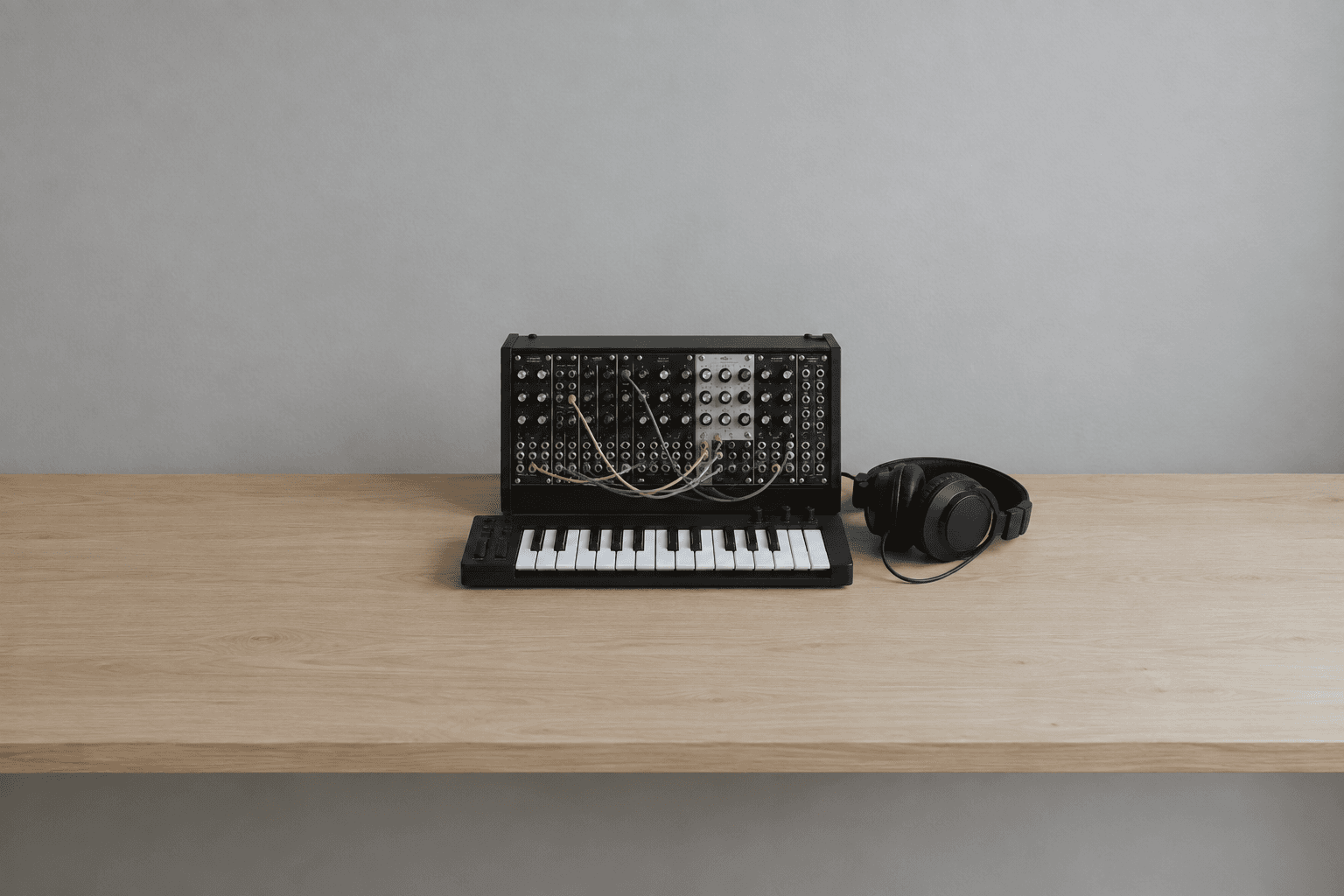
Bitwig Studio if sound design is the main thing you do: building patches, modulating everything, and making noises nobody has a preset for. Ableton Live if you want the larger community, the bigger pool of tutorials and courses, and Push. Both have a clip launcher and a timeline, so the choice is less about workflow than on the FL Studio or Cubase comparisons. The real split is where the sound design tools live. In Bitwig they are built into the DAW and every edition has some of them. In Ableton the deep end is Max for Live, which only comes with Suite.
Quick verdict
For modular-style sound design on a budget, full Bitwig Studio at £339 gets you The Grid and all 43 modulators for £200 less than Ableton Suite at £539. Bitwig Producer at £169 is the cheaper middle tier, but it has no Grid. If you want to learn from the widest range of courses, or you already own Push, Ableton Live Standard at £259 or Suite at £539 is the safer buy. Linux users have one real option here, and it is Bitwig.
What each one costs today
Bitwig prices are from Bitwig's own shop and Ableton prices from Ableton's, both checked on 28 September 2026. Neither is on sale.
| Bitwig Studio 6 | Ableton Live 12 | |
|---|---|---|
| Entry tier | Essentials, £79 | Intro, £69 |
| Middle tier | Producer, £169 | Standard, £259 |
| Top tier | Bitwig Studio, £339 | Suite, £539 |
| Entry tier track limit | Unlimited | 16 tracks total |
| Modular patching | The Grid, top tier only | Max for Live, Suite only (paid add-on for Standard) |
| Modulators | 10, 18 or 43 by edition | 2 in Intro, 6 in Standard and Suite, plus Max for Live devices in Suite |
| Updates | 12 months included, then £136 a year to renew | Paid major upgrades |
| Education price | Full version, £229 | 50% off, Suite £269 |
| Free trial | 30 days, no limits | 30 days, full Suite |
| Operating systems | Windows, macOS, Linux | Windows, macOS |
Bitwig undercuts Ableton at the middle and top tiers by £90 and £200. The entry tiers are close on price but not on use: Ableton Intro caps you at 16 tracks, while Bitwig Essentials has unlimited audio, instrument and hybrid tracks with 51 devices and 10 modulators. Essentials is the more usable cheap edition by some distance.
The update models differ, and it changes the long-run sum. Every Bitwig licence comes with a 12-month Upgrade Plan. When it lapses you keep the last version you received and it keeps working, as Polarity Music's licensing breakdown explains. Another year of updates costs £136 at Thomann UK. Ableton charges for each major version instead and gives point releases free. Neither is the lifetime free updates deal that FL Studio is, so budget for renewals either way.
Students should check both education prices before deciding. Bitwig Studio EDU is the full version for £229, Grid included. Ableton's education discount is 50%, which puts Suite at £269. That leaves £40 between the two top tiers, rather than £200.
Running until 5 October 2026
Bitwig is giving away u-he Diva, a synth it values at 179 EUR, with purchases of full Bitwig Studio registered by 5 October 2026. Producer, EDU and Upgrade Plan buyers, and anyone upgrading from Essentials or Producer, get u-he Zebra Legacy instead. Rekkerd's write-up has the full terms. Crossgrades and bundled licences are excluded.
The Grid against Max for Live
This is the centre of the sound design argument. The Grid is Bitwig's modular environment, with more than 230 modules across 17 categories. It comes as three devices: Poly Grid for building synths, FX Grid for audio effects and Note Grid for sequencers and note processors. You patch with virtual cables, audio and control signals are interchangeable, and any Grid signal can modulate the devices nested inside it. Bitwig 6 added four modules for quantising to the project's scale and shifting by scale steps.
Max for Live is broader and harder. Max is a full visual programming language, so as well as building synths and effects you can script Live itself: read and change tracks, clips and scenes, remap controllers, and talk to Arduino boards over OSC. Our Max for Live guide goes into what it does that a plugin cannot. The trade-off is that Max for Live makes you a programmer. The Grid feels more like a hardware modular system with a very large rack.
Edition gating decides a lot here. The Grid is only in full Bitwig Studio. Bitwig's edition announcement says that projects using devices outside your edition open in a player mode, so Producer and Essentials owners can play a Grid patch and tweak its exposed controls but cannot edit it. On the Ableton side, Max for Live comes with Suite, costs extra on Standard and is not available on Intro at all. For patching from scratch, that makes the real comparison £339 against £539.
If you want to use other people's work, Ableton has the larger library. The Max for Live community has been building and sharing devices since 2009, and a large share of Suite's own content, including LFO, Shaper and Envelope Follower, is built in Max. Grid patches are shared too, but the pool is smaller.
Modulation: where Bitwig pulls ahead
Bitwig's modulators attach to any device, including third-party plugins, and you drag from a modulator to a parameter to set how far it moves. Bitwig's overview page calls them audio-rate and polyphonic, which means a modulator inside a synth runs separately for each note you play. The full edition has 43, per the feature list, from ADSRs and LFOs to Math, Random, Note Counter, ParSeq-8 and XY pads. Producer has 18 and Essentials has 10.
Ableton works differently. Its modulation mostly comes from separate devices that you map to parameters, such as LFO, which modulates up to eight parameters from one device, and Shaper and Envelope Follower. Ableton's edition table lists two modulators in Intro and six in Standard and Suite. It works, but a parameter modulated by three sources in Bitwig is a few seconds of dragging. In Live it is three devices and some mapping, and per-note modulation lives inside individual instruments rather than across the whole DAW.
MusicRadar's review called Bitwig Studio 6 "a massive expansion of its abilities as a modulation and automation powerhouse". Version 6 launched on 11 March 2026, according to Sound On Sound. It added an Automation Mode that shows a lane for the last-touched parameter on every track, automation clips you can launch like any other clip, clip aliases for linked repeats, and a project-wide key signature with snap to key. The 6.1 update in August rebuilt the sampler, adding slicing in every play mode, a Spectral time-stretch mode and a granular mode called Fragments with up to 256 grains per voice. Spectral and Fragments are full version only.
Where Ableton still wins
Learning material is the big one for anyone on this site. Across the schools and platforms in our directory, Ableton Live is the DAW that comes up most, usually alongside Logic Pro. None of them lists Bitwig as a teaching DAW. If you plan to take a course, check which DAW it uses before you buy either. Learning sound design in Bitwig while your tutor demonstrates in Live is possible, but it makes the course harder than it needs to be.
Push is the other. Ableton designs Push 3 for Live, and in other DAWs it acts as a basic MIDI controller. The unofficial DrivenByMoss extension gives Push proper support in Bitwig, but Ableton does not support it. Our Push 3 comparison covers whether you need the hardware at all.
Live 12.3 also added Splice auditioning inside Live's browser, with samples playing in time and in key with your project. Bitwig has no equivalent sample-service tie-in. Suite also comes with more than 71GB of sounds.
Linux, and what your computer needs
Bitwig runs natively on Linux: Ubuntu 24.04 or later, or any modern distribution through Flatpak, on a 64-bit x86 processor with AVX2. Every edition runs on Linux, and CLAP plugins, the open format Bitwig developed with u-he, work in all of them. Ableton builds Live for Windows and macOS only. CDM has covered community patches that run Live 12 and Push under Wine, but they are unofficial and Ableton does not support them.
On Mac and Windows, Bitwig needs macOS 12 Monterey or Windows 10 or 11, 4GB of RAM and a processor with AVX2 support. That last point rules out some older Intel machines, so check your CPU before relying on a trial. Both trials are 30 days with nothing removed, and that is long enough to build a patch you like in each.
Which one to actually pick
- Bitwig Studio at £339 if you want to build synths and effects from modules without learning a programming language, and want deep modulation across every device you own.
- Bitwig Producer at £169 if you want Bitwig's modulators and workflow on a budget and are happy to play Grid presets rather than build them.
- Ableton Live Standard at £259 if you are taking a course that teaches in Live, or you plan to buy Push. Move to Suite when you want Max for Live.
- Ableton Suite at £539 if you want to program your own tools and control Live itself, and would rather draw on the large Max for Live community library.
- Bitwig if you run Linux. Ableton is not an option there without unsupported workarounds.
If this is your first DAW rather than a switch, our guide to choosing one covers the wider field. If you have settled on Live, our Standard and Suite comparison goes through what the £280 gap buys, and Cubase against Ableton covers the recording-first alternative.
Is Bitwig Studio cheaper than Ableton Live?
At the middle and top tiers, yes. Bitwig Producer is £169 against £259 for Ableton Standard, and full Bitwig Studio is £339 against £539 for Ableton Suite. The entry tiers are £79 and £69. Bitwig includes 12 months of updates and then charges £136 a year to keep updating, while Ableton charges for each major version.
Is The Grid the same as Max for Live?
No. The Grid is a modular patching environment for building instruments, effects and note processors from more than 230 modules. Max for Live is a full visual programming language that can also control Live itself, including tracks, clips and hardware. The Grid is quicker to learn; Max for Live can do more.
Which Bitwig edition has The Grid?
Only the full Bitwig Studio edition, at £339, or the £229 EDU version, which is the same software. Essentials and Producer owners can open projects that use Grid devices in a player mode and change exposed parameters, but cannot edit the patches.
Does Ableton Live run on Linux?
Not officially. Ableton builds Live for Windows and macOS only. Community patches for Wine can run Live 12 and Push on Linux, but they are unsupported. Bitwig Studio runs natively on Linux in every edition.
Can I use Push 3 with Bitwig?
Yes, through the unofficial DrivenByMoss extension, which gives Push proper support in Bitwig. Ableton does not support that setup, and without the extension Push acts as a basic MIDI controller outside Live.
What happens when the Bitwig Upgrade Plan runs out?
Your licence keeps working with the last version released during your plan. You only lose access to future updates. Renewing costs £136 a year at Thomann UK, and one licence can be activated on up to three computers.
Is Bitwig good for beginners?
It is a capable first DAW, and Essentials at £79 has no track limit. The catch is learning material: far more courses and tutorials use Ableton Live, so a beginner planning to learn from a course is usually better off matching the DAW the course teaches in.
Sources
Every price and fact above traces to a school or platform's own site, dated on its own listing page. See the methodology for how that works.
- Bitwig: buy Bitwig Studio (editions and prices)
- Bitwig: Bitwig Studio EDU
- Bitwig: download and system requirements
- Bitwig: feature list
- Bitwig: overview
- Bitwig: The Grid
- Bitwig: Bitwig Studio 6 is out now
- Bitwig: introducing three flavours of Bitwig Studio
- Thomann UK: Bitwig Studio Upgrade Plan
- Sound On Sound: Bitwig Studio 6 launches
- MusicRadar: Bitwig Studio 6 review
- Synth Anatomy: Bitwig Studio 6.1 sampler update
- Polarity Music: Bitwig 6 prices, licences and the Upgrade Plan
- Rekkerd: free u-he Diva with Bitwig Studio
- Ableton: Live 12 editions and pricing
- Ableton: Max for Live
- Ableton: Live for students and teachers
- Ableton: Live 12 trial
- Ableton Help Center: Live upgrade FAQ
- CDM: Ableton Live and Push can now run on Linux, unofficially
- DrivenByMoss: Ableton Push documentation