
Home / Blog / 10 things I wish I knew as a new producer
10 things I wish I knew as a new producer
Not another gear list. The things that actually slow new producers down: comparison, perfectionism and skipping feedback, not a lack of plugins.
Some links below are affiliate links. We may earn a commission if you sign up or buy through one, at no extra cost to you. See our privacy policy.
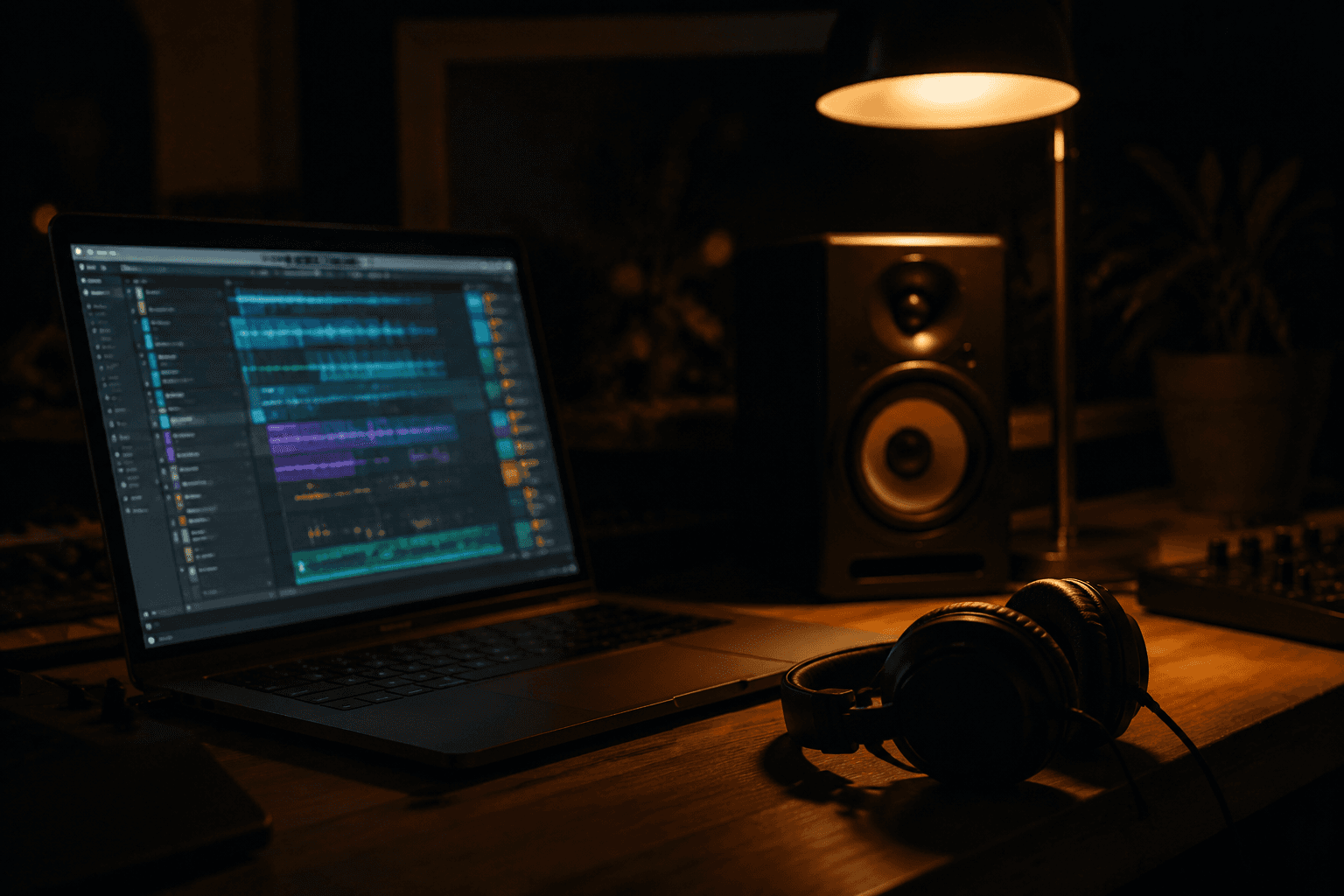
Most "things I wish I knew" lists for new producers are really gear regrets: the compressor bought too early, the laptop that couldn't handle the track count. The things that actually slow people down for the first year or two are rarely about the studio itself.
Two of these are Mark's own habits, he writes SoundSchooled and releases music as Doomar. The rest comes from producers talking, on the record, about the same problems: taste outrunning skill, tracks that never get finished, and the gap between what a preset gives you and what you actually learn from it.
Quick verdict
If you only take one of these: finish tracks anyway, even the ones you already know you don't love. Templates, feedback and letting go of perfectionism all exist to get you to a finished track faster, not to make any single track better.
Your taste is ahead of your skills, and that gap is normal
Ira Glass, the broadcaster behind This American Life, described this directly in a widely circulated interview about creative work: "All of us who do creative work, we get into it because we have good taste. But it's like there is this gap." The version of a track you can hear in your head, shaped by years of listening to finished, mixed and mastered records, is always going to be more advanced than anything your hands and ears can currently make. That's not a sign you picked the wrong hobby. It's the normal state for the first year or two of any creative skill, and the only way through it is making more tracks, not waiting until you're good enough to start.
Comparing your third track to someone else's 300th doesn't tell you anything
EDMProd's guide to producer progression makes a simple point worth sitting with: every producer you're comparing yourself to also has a folder of abandoned projects and a first year that sounded rough. What you see online is finished, mixed, released and promoted, not their actual starting point. Comparing your third track to someone else's 300th is comparing a rough draft to a highlight reel, and it tells you nothing useful about how you're actually doing.
Finish the track even when you already know you don't love it
"One finished song is better than 100 half finished!" is how Tronic label boss Christian Smith put it to MusicRadar. Finishing a track, arranging it, mixing it, deciding it's done, teaches things a half-built loop never will. You also won't know which of your early ideas were actually good until you've taken a batch of them all the way through and can compare finished tracks against each other, not half-finished ones against a memory of how you hoped they'd sound.
Perfectionism doesn't make a track better, it just stops it existing
Producers who finish a lot of music tend to have a working answer to "how do I know it's done," rather than an open-ended search for perfect. Detroit techno producer Claude Vonstroke's version, from the same MusicRadar piece: "It's finished when I start adding things that do not affect the quality." UK producer Lone's: "The track is finished when I can listen to it without wanting to change anything." Neither is waiting for perfect. They're both watching for the point where more work stops being useful, and stopping there.
Feedback from people ahead of you catches things your own ears can't
Extended critical listening measurably reduces your ability to judge subtle differences in a mix, which is one concrete reason a second pair of ears matters. It's not that you lack taste, it's that your own ears are temporarily unreliable after hours on the same track, in a way someone hearing it fresh isn't.
Mark's own experience backs this up. Early on, track feedback from Syntho's community was, in his words, motivational at a stage when he had no other way to judge whether a track was actually working. Later, 1:1 lessons booked directly with house and techno producers Denney and Audiojack did something peer feedback couldn't: helping shape what he calls his raw sound into something more marketable, the kind of structural and mix feedback that's hardest to get from anyone who isn't already releasing records themselves.
Using loops and presets isn't cheating
We've covered this in more detail in our piece on sample packs, but it's worth repeating here: a royalty-free loop from Splice or a preset from a synth's factory bank is a licensed tool, not a shortcut you need to hide. KSHMR's commercial sample packs turned up, independently, in tracks by both Lisa of BLACKPINK and Hwasa of MAMAMOO in 2021; neither had copied the other, they'd both legally bought the same sound. Building a track around bought sounds while you're still learning arrangement and mixing is a reasonable way to start, not a lesser one.
Learn sound design anyway, even if you mostly use presets
MusicTech's guide to synthesis makes the case plainly: synths differ in interface, but they're all built from the same handful of principles, oscillators, filters, envelopes, so understanding one properly makes every other synth, and every preset inside it, easier to read and edit. A preset you understand is a starting point you can bend into something that's actually yours. A preset you don't understand is a wall you can only work around.
A DAW template saves more time than it looks like it should
Mark's Ableton template is fixed: a KICK group; a DRUMS group split into CLAP, SNARE, HATS and PERC racks, each a selector rack preloaded with a shortlist of samples he already likes; a BASS group with a handful of go-to bass VSTs; a SYNTHS group with six VSTs he reaches for often; and separate VOCALS and FX groups, each with the bus effects and compression he applies on every project already sitting on the chain. None of that is about limiting creativity. It's about not spending the first twenty minutes of a session routing audio and hunting through sample folders before he's written a single idea, and it keeps his tracks sounding like his tracks from project to project, rather than starting from a different signal chain every time.
EDMProd's workflow guide makes the same case in general: a ready-to-go template exists to shrink the gap between an idea in your head and hearing it back, which is exactly the gap that kills momentum on a new track.
A new plugin won't make you better at this
The belief that the next plugin is what's standing between you and a finished track has a name: Gear Acquisition Syndrome, or GAS, a term Steely Dan guitarist Walter Becker coined in a 1996 Guitar Player magazine piece about guitarists convinced their next purchase would fix their playing. It applies just as well to a synth plugin as it does to a guitar. A new synth can genuinely inspire a track, and that's real and worth allowing, but it doesn't teach you arrangement, mixing or finishing, and those are what actually improve between your fifth track and your fiftieth. If you do want a specific new tool, our free VST plugins guide covers what's actually worth having before you spend anything.
A laptop, headphones and one pair of monitors is a complete studio
We've made the full case for this elsewhere, covering everything from a $40 pawn-shop synth that helped invent acid house to Burial making a Mercury-nominated album on a "rubbish, dying computer": see expensive gear doesn't make you a better producer. The short version: a laptop that can run your DAW (see our laptop guide if you're not sure what you already own is enough), a pair of headphones for detail work, and one pair of monitor speakers to check how a mix translates off headphones, is a complete studio for learning the actual skill. An audio interface (see our buying guide) only becomes necessary once you're recording something external, a mic or a hardware synth, not before.
What's the single most important habit for a new producer to build?
Finishing tracks, even ones you already know you don't love. Every other habit on this list, templates, feedback, letting go of perfectionism, exists to get you to a finished track faster, not to make any one track better.
Is it OK to use presets and sample packs as a beginner?
Yes. A royalty-free loop or a factory preset is a licensed tool you're paying to use, not a shortcut you need to hide. See our full piece on sample packs for how the licensing actually works.
Do I need expensive gear to start producing?
No. A laptop that can run your DAW, a pair of headphones, and one pair of monitor speakers is enough to learn the actual skill. An audio interface only becomes necessary once you're recording something external.
How do I know when a track is actually finished?
Working producers tend to have a specific, personal test rather than waiting for perfect. Claude Vonstroke's is noticing when further changes stop affecting the quality; Lone's is being able to listen through without wanting to change anything.
Where can a new producer actually get useful feedback?
Producer communities attached to courses or platforms are a reasonable start, since people there are learning the same things you are. Feedback from producers further along, whether that's a course tutor or a 1:1 session, tends to catch structural and mix issues peer feedback misses.
Should I still learn synthesis if I mostly use presets?
Yes. Synths share the same underlying principles (oscillators, filters, envelopes) whatever their interface looks like, so understanding one properly makes every preset, in every synth, something you can actually edit rather than just accept as-is.
Sources
Every price and fact above traces to a school or platform's own site, dated on its own listing page. See the methodology for how that works.
- This American Life: Ira Glass on Storytelling
- EDMProd: The Producer's Ladder of Success
- MusicRadar: 12 artists on how they beat writer's block and finish songs
- Production Expert: a top mixer's advice on ear fatigue
- MusicTech: beginner's guide to synthesis in music production
- EDMProd: Workflow, the complete guide for music producers
- Guitar World: Gear Acquisition Syndrome